History of Leros
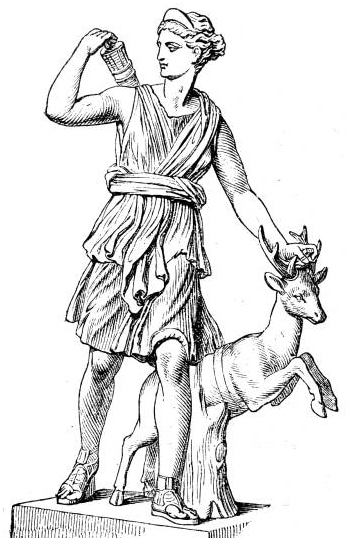
Leros, the island of Artemis, goddess of the hunt, presents an interesting history, because, as various excavation finds testify, life has been present on the island since ancient times, in all periods.
Remains of a Neolithic settlement were found in Partheni. Its first inhabitants are mentioned in the sources, Kares, Leleges and Phoenicians
Bronze age.
Later came Lycians and Eteocretans at the time of Minoan’s sea empire, led by his brother Rhodamanthy. After the domination of the Dorians, it became Doric, but the Ionian Milesians drove out the Dorians and took control of the island. This also emerges from what is mentioned in Strabo, who mentions the testimony of Anaximenes of Lampsakinos: “Icaron the island and Leron the Milesians imprisoned”.
Homer mentions in the Iliad that “the Kalydnai sent ships to Troy”. “Kalydnai” was the current complex of Leros and Kalymnos, and the leadership of the participation in the Trojan War (1193-1184 BC) was assigned to Herakles’ grandsons Antiphos and Pheidippos (Ill. 8. 677). During the following centuries, the Ionian influence became stronger and according to Herodotus, close commercial and political relations developed between Miletus and Leros.
The same historian mentions that, during the defection of Miletus against the Persians, the tyrant Aristagoras feared the dominance of his political opponents and the destruction of the Ionian metropolis. His revolutionary friends led by the historian Ecataios suggest that he take refuge in Leros instead of Sardinia or Thrace, where there are “friends and relatives”, to build a fort and when the danger passes, using this island as a base to return to Miletus. There is no doubt that the Ionians of Leros would have provided asylum to Aristagoras, since Leros was a “section” of the mighty Miletus. But in 494 BC Leros as well as Miletos is occupied by the Persians.
Ancient times
In the period that follows, Leros joins the allied cities, which, under the leadership of the Athenians, formed the defense link against the Persians. In an inscription that was saved it says “MILESIOI LEROS…” followed by a list of cities and islands that made up the Association. In the same period, Leros follows the democratic system of governance of Athens and its calendar. Thucydides points out the special importance of the bays and ports of Leros during the period of the Peloponnesian War (431-404 BC). Warring fleets use it as a base. With the end of the disastrous war for the Greeks, Leros comes under the rule of the Spartans.
Excavation findings of the last years and other testimonies reinforce the opinion that the ancient city of Leros was located near the port of Ag. Marina.
On the slope of the Merovigli hill is the source of Paleaskloupis (Old Asklepios) and perhaps in the same area there was a sanctuary of Asklepios, as tradition would have it, but also the existence of an ancient capital, which was found in the vicinity of the current church of Ag. Panteleimon.
The existence of an ancient temple of the Virgin Artemis “en topo elodi” in Partheni is mentioned by the ancient authors. The temple is very likely to have been located where today there are the ruins of the Byzantine temple, from the early Christian period, while the opinion that the Temple of Artemis “sits on the hill”, on the well-known pedestal with carved stones, gathers few possibilities.
From the archaeological finds found so far, it is proven that there was life in this area in all historical periods, but the construction of the airstrip significantly limits the chances of accurately locating the location of the ancient temple.
Related to the Temple is the tradition about the Meleagrides, the sisters of Meleagros Gorgis, Eurymides, Deianeira and Melanippi, whom the goddess Artemis transformed into hens and sent to Leros, because they mourned the loss of their brother.
The historian Pherekydis was born in Leros and flourished during the first half of the 5th century BC. century, called Athenian, because of the long period of time he stayed in Athens.
His works: “Histories” “Genealogiai” “Autochthones or Archeology Attiki”, a work consisting of books with extensive reference to the mythical traditions from Athens, the gods, heroes and the most important Athenian genera. His “Peri Leros” work, as well as others, have been lost.
A little later than Pherekydis was the gnomic philosopher and poet Dimodokos, known from his epigrams.
Hellenistic period
Leros is freed from Persian rule during the victorious advance of Alexander the Great. Coins, tombstones with Macedonian names known from other regions testify to an uninterrupted historical course from the classical to the Hellenistic years.
Byzantine times
During the Byzantine period, Leros followed the fate of the other islands of the Dodecanese. In Partheni there must have been a settlement that started from the sea and reached the hill.
A short distance from the sea, the ruins of a three-aisled basilica, probably from the early Christian period, and a monastery complex were discovered.
The Castle of Lepida (known as Paliokastro) dominates the bay of Xirokampos. In a golden decree of July 1087, the transfer of the inhabitants from the “Castle of the Blades” is defined, “due to disputes between the monks and the inhabitants”.
The grant of half of the Castle was made by the Byzantine emperor Alexios I Komnenos to Ioannis Latrinos by world name, later Saint Christodoulos of Patmos. the emperor initially refuses the concession – especially of Leros – to Christodoulos, whose opinion ultimately prevails.
According to a previous decree in 1087, he is listed as the main owner of Patmos, Lipsi and a large part of Leros (Partheni, Kastro, Temenia).
It reaches Patmos and then comes to Leros.
According to the testimony of the medievalist Emmanuel Gedeon, Christodoulos built in Partheni the small church and the Metochi of Agios Georgios with pieces from the columns of the Ancient Temple of Artemis.
Contrary to the imperial decision, the Lerioi rebel (1087) and threaten Christodoulos and its monks. From 1087, the “main town” was moved from the castle of Panteli to Lepida, the main city remained the same since then and throughout the Frankish occupation of the island, until its occupation by the Turks in 1523.
The Castle of Leros, relatively small in area, is “fortified and impregnable”. Its location is timely and predictable, its visitor can see not only the largest part of Leros, but also the nearby islands of Kalymnos to the south, Leipsos and Patmos to the north and the Asia Minor coast to the East.
Near the outer enclosure of the north and south sides, the foundations of the small houses that amounted to 180, as mentioned in the decree of 1087, are preserved. In the beginning, the guards lived in these houses and then the residents of the surrounding areas stayed to protect themselves from various raids.
Turkish rule
In January 1523, after a siege, Leros surrendered to the Turks. When in 1522 the Knights closed themselves in the Fortress of Rhodes and left the rest of the islands to their fate, the inhabitants tried to save everything that could be saved. They decided to meet Suleiman with their representatives, who was encamped in the Asia Minor peninsula of Cnidus, and declared submission to him.
They offered him fresh bread and soft white sponges, the only products of the islands and their hospitable sea. They told him about the barren and stony soil of the islands, about the lack of water and about the imports of all basic goods.
The spontaneous arrival of the islanders, which is favored by the holy Muslim law, but their simplicity and poverty convinced the Sultan. In 1523, he issued a firman by which he granted the privilege of full self-government and autonomy to the Dodecanese, except for Rhodes and Kos. That is why these islands are called “Privileged” and “Sporades”, Turkish “Issporat Adasi”.
He set a “Machto” tax for each island “cat. cut off”, which was paid in two installments for the maintenance of the holy Muslim institutions of Rhodes. Administratively it allowed full self-government and autonomy, to be governed by local rulers of each island, elected by popular vote in the first week of each year.
The sovereignty of the Sultan was represented by a “Sumbasis”, who had no involvement in the internal issues of the islands. Thus the Dodecanese were free to regulate their local affairs as they wished, and to judge them according to their manners and customs. These privileges were ratified by a series of firmans by Sultans Mehmet IV (1644), Ahmed III (1717), Osman III (1752) and Abdul Hamid I twice (1772 and 1773) and constituted an immutable regime for several centuries.
The involvement of Turkish officials in the affairs of the Dodecanese was also prohibited. In 1648, during the Turkish-Venetian war, the Venetian admiral Foscolo Leonardo from the port of Ag. Marinas bombarded the NW side of the Castle, knocked it down and occupied Leros temporarily. Even today traces of the old NW corner that Foscolo demolished can be seen.
Leros and the Greek revolution
The centuries pass and the Dodecanese progresses and develops with its autonomous regime. Religion and Greek education in schools did not leave the national spirit dormant. Despite the regime of autonomy and independence, the Dodecanese rise up and actively participate in the Greek revolution of 1821.
The banner of the revolution is raised first in Patmos and then in Leros. Krasouzis, Turkomanolos, the Hatzimanoli brothers begin an armed struggle against the Turks. In fact, one of the two is seriously wounded in Crete and dies in Nafplion.
The Patriarch of Alexandria Theophilos sends enthusiastic letters to the Dodecanese urging the inhabitants to revolt. He himself addresses a letter of similar content to the Bishop of Lernes (Leros) Jeremias dated (in Patmos akka (1821) April 16th) in which, among other things, he states: religion and country”.
On August 29, 1824, a Friday, across from Leros, the Old Man’s Naval Battle takes place. The Turkish-Egyptian fleet consisting of 200 warships, frigates and brigs under the leadership of Ibrahim and Khosref Pasha was defeated by the fleet of the three naval islands led by Admiral Miaoulis. Some of the Turkish ships fled to Halicarnassus and others to Leros to save themselves.
At 2 o’clock in the afternoon and while the naval battle was nearing its end, a Tunisian frigate of 38 guns was set on fire at a short distance from Leros by the Hydrean incendiary Vatikiotis, who also captured its captain. The Lerians, mounted on the mountains overlooking the coast of Asia Minor, watched the great formation of the enemy’s fleet, from Gerontas to Leros and Lipsi, and the progress of the naval battle.